
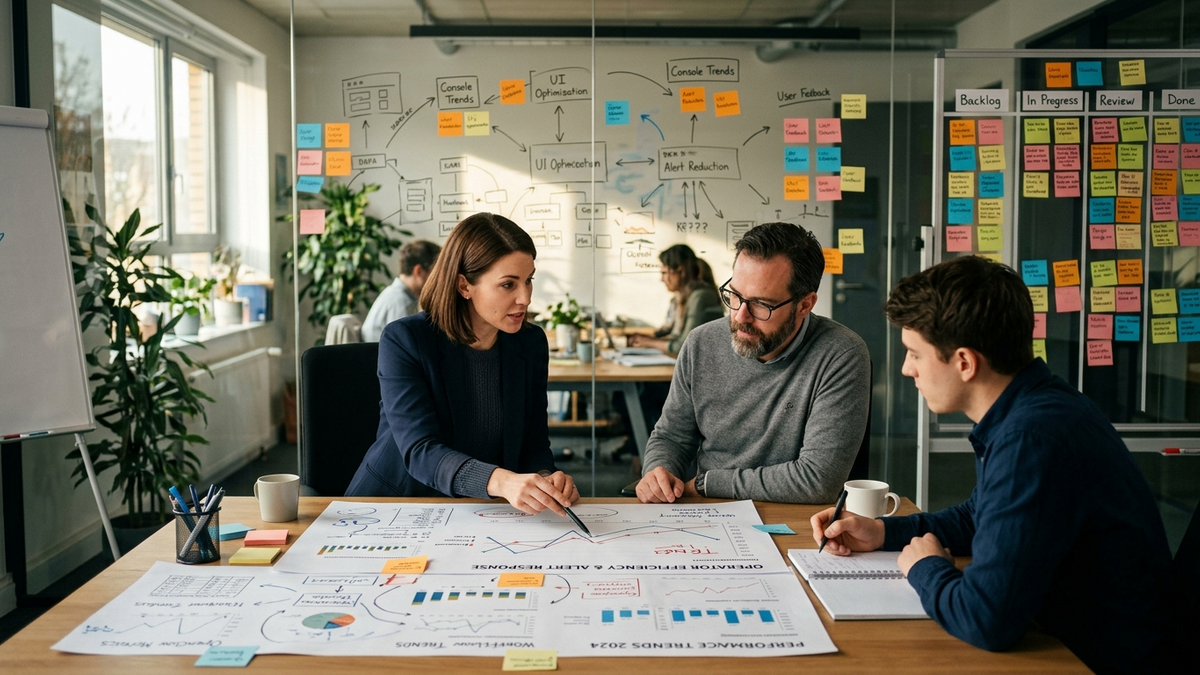
A practical OpenClaw trend on June 18, 2026 is that the useful part of an agent stack is no longer just the model or even the prompt. It is the operator console around the agent: the place where sessions are launched, tools are connected, recurring jobs are scheduled, browser or terminal work is inspected, and outputs are reviewed before they move downstream. Recent product changes from GitHub, OpenAI, and Anthropic all point in that direction. The category is becoming less about a clever chat box and more about a work surface that helps one person supervise many bounded runs.
That shift matters most for solo operators, creator businesses, and small teams. They rarely need a massive internal platform before AI becomes useful. They need a dependable place to run repetitive jobs such as content packaging, inbox triage, research collection, repository maintenance, and browser-based task execution. In that context, the winning product is the console that makes those jobs visible and steerable. OpenClaw has already been organized around that operating idea through sessions, workspace files, cron runs, and reusable skills. The broader market now appears to be converging on the same model.
GitHub is turning the desktop and the workflow runner into one operator surface
GitHub's June 17 announcement that the GitHub Copilot app is generally available is more important than a simple client launch. GitHub describes it as the desktop home for agent-driven development and says users can start sessions from an issue, pull request, or prompt, run parallel sessions across repositories, review diffs, validate work in an integrated terminal and browser, and schedule recurring cloud automations. That is effectively a compact operator console: launch, inspect, steer, validate, and hand off.
One week earlier, GitHub said Agentic Workflows entered public preview and can automate issue triage, CI failure analysis, and documentation updates inside GitHub Actions. Those automations are defined in Markdown and compiled into normal Actions YAML. For operators, the pattern is the real story. The agent is becoming one layer inside a larger control surface that includes event triggers, reusable instructions, validation, and existing operational checks. That fits closely with OpenClaw usage patterns covered in parallel operator workflows and scheduled cron jobs.
Session history is starting to matter as much as the current run
GitHub's June 2 update to /chronicle adds another clue about where the market is heading. GitHub says Chronicle now gives users a more complete view of their Copilot sessions across GitHub and IDEs, letting them turn session history into guidance, summaries, and custom instructions. That means the console is not only where work is run. It is also where prior work becomes reusable context.
For SMBs and creators, this is practical rather than abstract. A one-person content studio can look back at which briefing sessions led to clean drafts and which ones created avoidable rewrites. A small product team can inspect where repeated QA or release-note jobs stall. A founder can preserve useful operating context between daily runs without relying on memory. The same logic already appears in OpenClaw-style approaches to workflow memory surfaces and heartbeat monitoring, where durable context lowers the cost of restarting work.
OpenAI is pushing the harness, not just the chat response
OpenAI's April 15 post on the next evolution of the Agents SDK points the same way from the infrastructure side. OpenAI says the updated SDK is built for agents that inspect files, run commands, edit code, and work across long-horizon tasks in controlled sandbox environments. More importantly, the company frames the harness itself as the key product layer: configurable memory, tool use, filesystem access, sandbox-aware orchestration, and resumable execution.
That matters because many small operators do not need a general AI personality. They need a bounded worker with a stable workspace. A customer research workflow needs sources and output folders. A publishing workflow needs a style brief, citation rules, and an approval step. A browser-based data collection task needs controlled access to pages and a clean way to save artifacts. In other words, the reliable unit is not the chat session by itself. It is the console plus workspace plus run contract. That maps directly to OpenClaw knowledge on browser control, custom skills, and shared operator workspaces.
Improvement loops are moving from model tuning to run review
OpenAI's May 12 cookbook on building an agent improvement loop with traces, evals, and Codex makes that operating model explicit. The notebook starts with real traces, adds human and model feedback, turns that feedback into reusable evals, and creates a handoff for the next harness change. The practical implication is that useful agent systems are increasingly improved from evidence gathered in the console, not from intuition alone.
Small teams can apply the same pattern without adopting heavyweight process. A support automation can log where summaries miss refund policy details. A lead-gen workflow can compare which prompts produce usable qualification fields. A creator workflow can flag where source citations break or where packaging steps drift off brand. Each of those observations becomes more useful when the runs, artifacts, and changes live in a single visible work surface instead of scattered chats.
Anthropic's new evidence suggests the human role is becoming supervisory, not mechanical
Anthropic's June 16 report on agentic coding and persistent returns to expertise strengthens the same reading. Based on a privacy-preserving analysis of about 400,000 sessions, Anthropic says people usually make most of the planning decisions while Claude makes most of the execution decisions, and that usage has been shifting toward more end-to-end work such as deploying code, running pipelines, analyzing data, and writing non-code documents.
Anthropic's earlier February 2026 research on measuring agent autonomy in practice adds that experienced users tend to move away from approving every single action and toward monitoring and intervening when needed. That is almost a definition of operator-console work. The human is not there to click everything manually. The human is there to set goals, read the state of the run, interrupt when needed, and tune the workflow over time.
What OpenClaw operators should do with this trend
The strongest near-term response is to design agent systems around one reviewable home. Put recurring work behind clear triggers. Store the role, scope, and output rules in files. Keep artifacts where the next run can find them. Prefer bounded browser, terminal, and research sessions over vague all-purpose autonomy. Then review runs often enough to tighten the loop.
On June 18, 2026, the most credible direction in agent tooling is not that models suddenly became magical employees. It is that the surrounding console is getting good enough to make agents manageable as everyday operators. For OpenClaw users, that is encouraging news. The future looks less like one giant AI brain and more like a durable operator cockpit where memory, schedules, tools, and human judgment work together.
Sources
- GitHub Changelog: GitHub Copilot app generally available, June 17, 2026
- GitHub Changelog: GitHub Agentic Workflows is now in public preview, June 11, 2026
- GitHub Changelog: Gain insights across your agent sessions with /chronicle, June 2, 2026
- OpenAI: The next evolution of the Agents SDK, April 15, 2026
- OpenAI Cookbook: Build an Agent Improvement Loop with Traces, Evals, and Codex, May 12, 2026
- Anthropic: Agentic coding and persistent returns to expertise, June 16, 2026