
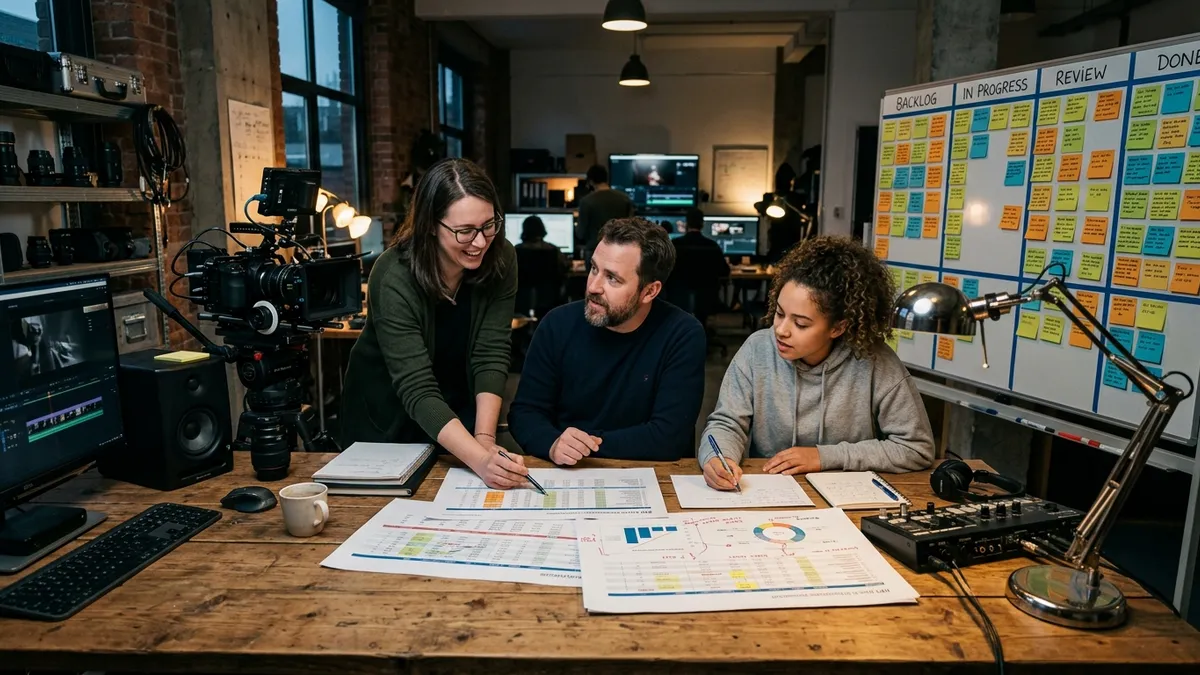
The clearest OpenClaw-adjacent trend on June 1, 2026 is not a single model launch. It is the rapid shift toward shared operator workspaces: environments where several people can supervise the same agent workflow, connect approved tools once, and keep long-running tasks moving without rebuilding context from scratch. For solo operators, creators, and small businesses, this matters more than abstract autonomy benchmarks. It turns agents into usable operating surfaces for recurring work.
The recent product signals are unusually consistent. OpenAI introduced workspace agents in ChatGPT on April 22, positioning them around shared workflows, approvals, schedules, and Slack-based collaboration. Notion launched its developer platform in May and described Custom Agents as a collaborative AI workspace where teams and agents work side by side. Anthropic followed with Claude Managed Agents updates on May 19, adding self-hosted sandboxes and MCP tunnels. Microsoft simultaneously signaled MCP support inside agent workflows, while Coder launched infrastructure for parallel agent execution. Taken together, these updates point to a practical pattern that OpenClaw operators can apply now: shared context, reusable tool access, and background execution with human checkpoints.
Why this trend matters to OpenClaw users
OpenClaw has always been strongest when work starts in familiar channels and moves through explicit operational loops. That makes the current shared-workspace trend especially relevant. Small teams do not usually need a giant orchestration suite. They need a stable place where an article draft, lead-research job, content calendar update, or repo-maintenance task can persist across people and across time.
In practice, this means one person can launch a run in the morning, another can inspect intermediate output later, and the final decision-maker can approve or redirect the result without starting over. That fits how founders and operators actually work: fragmented attention, multiple surfaces, and a constant need to preserve context. It is also why internal playbooks like OpenClaw cron jobs, heartbeat monitoring, and chat-native workflows matter so much. They are the scaffolding around this trend.
Shared agents are replacing isolated prompt sessions
OpenAI’s workspace-agents launch made the shift explicit. The company described shared agents that can handle complex tasks and long-running workflows in the cloud, continue working when the operator is away, and run inside Slack or ChatGPT with approvals when needed. The examples were concrete: weekly metrics reporting, product-feedback routing, lead outreach, and software request handling. Those are exactly the kinds of repeatable jobs that SMB teams usually patch together with spreadsheets, inbox rules, and manual follow-up.
For OpenClaw operators, the takeaway is straightforward. The winning pattern is no longer “ask an agent a clever question.” It is “define one recurring business workflow, give it the right triggers and tools, then keep it visible to the humans who own the outcome.” That is the same progression discussed in operator runbook automation and workflow blueprints, but the broader market is now packaging that pattern into first-class product surfaces.
Tool standards are becoming part of the workflow, not an afterthought
A second trend signal is the normalization of reusable tool access. Microsoft’s 2026 release-plan documentation says MCP-compliant tools and knowledge servers can now be discovered and invoked as steps inside agent workflows. Anthropic’s May 19 update pushed the same direction from the execution side by letting Managed Agents connect to private MCP servers through tunnels and run tools inside sandboxes controlled by the customer or a managed sandbox provider.
Reframed for smaller operators, this is not about vendor ideology. It is about reducing custom glue code. If the same tool definition can be reused across several workflows, a team no longer has to rebuild every CRM lookup, publishing action, or internal knowledge fetch from scratch. That lowers implementation overhead and makes it easier to maintain bounded, documented automations. The closest OpenClaw parallel is the disciplined use of custom skills and tool routing: define the action once, then reuse it across sessions and schedules.
Collaboration surfaces are becoming more important than bigger prompts
Notion’s May 13 developer-platform launch is another useful marker because it framed agent adoption around where teams already coordinate work. The company said Custom Agents had already passed one million builds and emphasized weekly reporting, Slack question-answering, and automated task routing. Coder’s May 6 agent release made a related point for technical operators by focusing on parallel task delegation, centralized control of models and skills, and isolated workspaces for agent execution.
These launches suggest a broader implementation lesson: value increasingly comes from supervision and handoff surfaces rather than raw model novelty. Operators benefit when agents are easy to assign, pause, inspect, and compare. A creator business might keep a research-and-drafting loop alive across the week. A local service company might schedule quote follow-up preparation every morning. A small software shop might run issue triage, changelog drafting, and dependency checks in parallel. In each case, the shared workspace is what prevents the system from collapsing into disconnected chats.
What SMB and creator teams should implement now
The most practical next step is to pick one workflow that already happens every day or every week and redesign it as a shared operator loop. Start narrow. Good candidates include content research and briefing, inbox triage with drafted replies, weekly performance reporting, customer follow-up preparation, and engineering maintenance sweeps.
The workflow should have five visible parts:
- Trigger: a cron schedule, inbound message, or manual start command.
- Shared context: one thread or workspace where the run stays visible.
- Reusable tools: approved systems for research, drafting, lookup, or publishing.
- Approval gate: human review before external sends or irreversible actions.
- Post-run note: a summary of what worked, failed, or needs correction next time.
This is where OpenClaw remains especially useful. Its strengths line up with the market trend: channel-native intake, scheduled execution, background work, and operator control. Teams exploring this seriously should also study operator control loops and founder daily ops, because the operational habit matters as much as the tooling.
Near-term outlook
The trend line now looks durable. Shared agent workspaces, reusable tool layers, and background execution are showing up across model vendors, productivity platforms, and developer tooling. That does not mean every operator needs a complex multi-agent stack. It means the baseline expectation is changing. Agents are moving from one-person experiments into repeatable, inspectable workflows that more than one person can own.
For OpenClaw users, the implication is practical: build around shared context and recurring loops first. The teams that benefit most from the next wave will not be the ones chasing the flashiest demo. They will be the ones that turn real operating tasks into supervised workflows with stable tool access and lightweight human checkpoints.
Sources
- OpenAI, “Introducing workspace agents in ChatGPT,” April 22, 2026
- Notion, “Introducing Notion’s Developer Platform,” May 13, 2026
- Anthropic, “New in Claude Managed Agents: self-hosted sandboxes and MCP tunnels,” May 19, 2026
- Microsoft Learn, “Use MCP-compliant tools in agent workflows,” 2026 release wave 1
- Coder, “Introducing Coder Agents,” May 6, 2026