
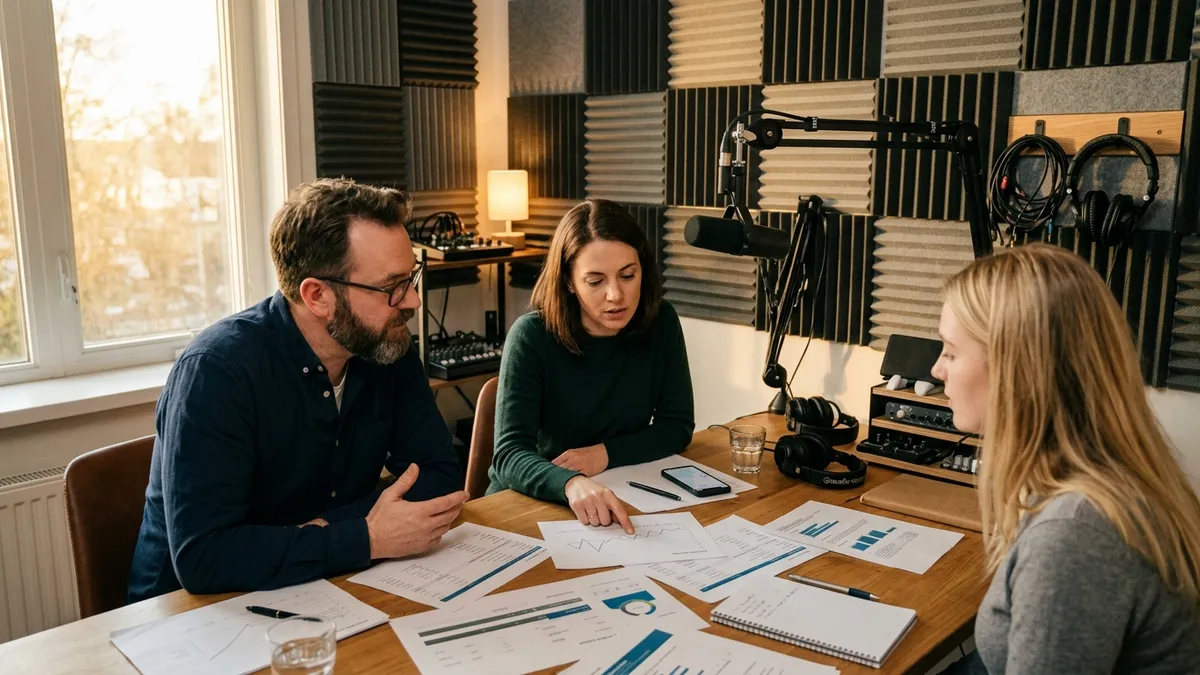
A practical AI agent trend on Thursday, August 27, 2026 is that small teams are moving away from the idea of one super-assistant that does everything. Current primary sources from OpenAI, Anthropic, GitHub, and the Model Context Protocol project point toward a different operating model: a lead agent stays in control of the user-facing workflow while specialist agents handle narrow research, drafting, coding, validation, or reporting jobs in parallel or through explicit handoffs. That shift matters because it fits how real operators work. A creator studio, SaaS shop, or agency rarely needs maximum autonomy. It needs bounded delegation, clear ownership, and outputs that can be reviewed quickly.
This pattern already maps well to hands-on operator systems built from custom skills, scheduled runs, and lightweight review loops. The notable market change is that multi-agent collaboration is now being documented as a mainstream implementation choice rather than a research curiosity. The practical question for smaller teams is no longer whether to use agents at all. It is how to split one repeated workflow into specialist roles without creating chaos.
Parallel specialists are replacing the one-big-prompt approach
OpenAI's current multi-agent guide says a model can spin up subagents for parallel, focused work and coordinate them into a final response. The documentation is explicit about when that is useful: tasks with independent workstreams, such as researching several sources in parallel, comparing options, or implementing separate components. That is a more grounded pattern than the older vision of one chat thread doing everything sequentially. For small teams, the gain is not just speed. Focused subagents keep unrelated context from colliding, which makes the outputs easier to trust and easier to debug.
In operator terms, this looks less like “build an autonomous company” and more like “separate the workbench.” A founder might keep one agent focused on prospect research, another on first-draft outreach, and a third on turning approved notes into CRM-ready updates. A content team might split sourcing, summarization, headline testing, and publishing prep into distinct lanes. Existing coverage on prompt-to-workflow transformations and SMB approval loops reflects the same design pressure: smaller systems become more useful once each step has a narrow contract.
Manager-plus-specialist orchestration is becoming the default shape
OpenAI's orchestration guide goes further by separating two patterns. In one, a specialist takes over through a handoff. In the other, the main agent stays in charge and calls specialists as bounded tools. The guide recommends keeping each specialist narrow and adding them only when the contract truly changes. That advice is especially relevant for SMBs and creators because excessive splitting creates more prompts, more traces, and more approval surfaces without necessarily improving the result. The practical lesson is that a small team does not need a sprawling agent org chart. It needs a stable manager workflow with a few well-chosen assistants.
That manager-first structure lines up with implementation patterns in founder daily operations and newsletter production. One durable workflow remains the anchor. Specialists only handle bounded jobs such as summarizing, validating, formatting, or gathering evidence. This is a useful reframing for operators who have been told that “multi-agent” automatically means complexity. The verified sources suggest the opposite: multi-agent setups work best when they reduce the cognitive load on the person supervising them.
Workflow files and custom agents are turning roles into reusable assets
GitHub's June 9, 2026 post on custom agents in Copilot CLI describes repeated tasks being encoded into consistent, reviewable workflows through Markdown-defined agents. Anthropic's subagents documentation describes the same shift from a different stack, noting that custom subagents can have their own prompts, tool restrictions, permission modes, hooks, and skills. The common thread is important. Specialist roles are becoming durable files rather than informal prompt fragments remembered by one power user.
For a small agency, that can mean keeping a reusable “client brief distiller,” “SEO fact checker,” or “proposal QA” agent profile. For a solo developer, it may be a code reviewer, release note drafter, and regression investigator. For a creator business, it may be source gatherer, transcript cleaner, and publishing checklist operator. The value is not just repeatability. It is portability. Operator knowledge moves out of a single chat history and into inspectable files that new collaborators can reuse. That is consistent with previous reporting on open-source operator stacks and the knowledge base entry on GitHub repo maintenance.
Deterministic checks and async task handles make crews easier to supervise
Specialist crews only help if their work stays legible. Anthropic's hooks guide describes hooks as deterministic lifecycle commands that always run instead of relying on the model to remember. Meanwhile, the July 28, 2026 MCP specification lists Tasks as an official extension for asynchronous long-running operations with polling, mid-flight input, and durable handles. OpenAI's recent Codex platform materials fit the same operational direction by describing bounded agent workflows for scripts, CI jobs, and one-off background tasks, as well as reviewed workflow documentation for repetitive work.
For small teams, those pieces solve a common problem. Once work is split across specialists, someone still needs to know what happened, which checks ran, and where the run paused. Deterministic hooks can enforce a style pass, test run, or notification. Task handles can keep a research sweep or catalog cleanup running without tying the operator to one session. This is the same logic behind trace and regression loops and the knowledge page on browser control: the workflow becomes production-friendly when every delegated step leaves a visible trail.
What this means for today's operator builds
As of August 27, 2026, the strongest verified multi-agent trend is not that teams need more agents. It is that they need cleaner boundaries between them. The practical build pattern for operators is to keep one manager workflow in charge of the final output, define only a few specialists whose jobs are genuinely different, store those specialist roles in reusable files, and add deterministic checks where failures usually occur. For SMBs, consultants, and creator businesses, that is a more realistic implementation path than chasing a fully autonomous system. The emerging stack favors small, reviewable agent crews that can be scheduled, resumed, and refined over time.
Sources
- OpenAI API Docs: Multi-agent
- OpenAI API Docs: Orchestration and handoffs
- OpenAI Developers: Automating repetitive work at OpenAI with Codex (August 25, 2026)
- Anthropic Claude Code Docs: Create custom subagents
- Anthropic Claude Code Docs: Automate actions with hooks
- GitHub Blog: From one-off prompts to workflows: How to use custom agents in GitHub Copilot CLI (June 9, 2026)
- Model Context Protocol specification (July 28, 2026)