
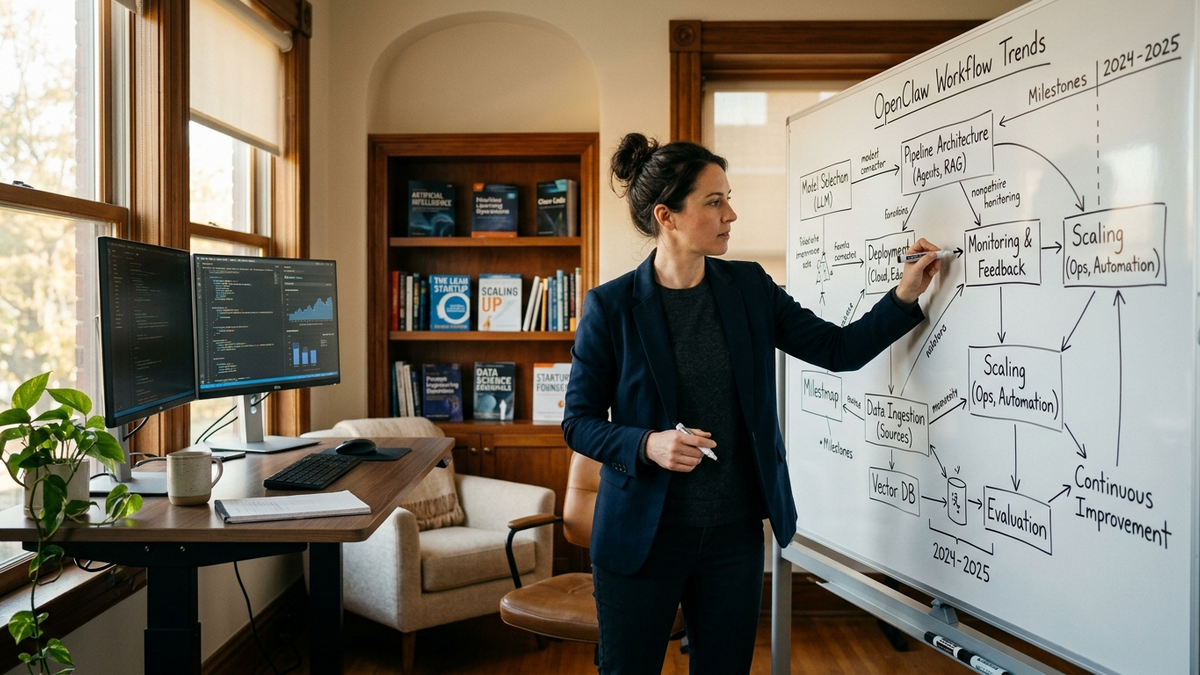
A practical OpenClaw trend in mid-2026 is that useful operator workflows are becoming less chat-centric and more runtime-centric. The strongest patterns are not about one model producing one surprisingly good answer. They are about an agent stack that can connect to the right tools, keep working without timing out, touch real software when needed, and leave behind enough evidence for a human to inspect the result. For solo operators, creators, agencies, and small businesses, that matters because repeated work is where the payoff lives.
Several verified sources point in the same direction. OpenAI's guide to MCP and connectors shows how agent workflows can import tool definitions from remote MCP servers and control approvals on tool calls. OpenAI's background mode guide explains how longer tasks can run asynchronously and be polled later instead of being forced through one synchronous request. Anthropic's launch post for the Model Context Protocol frames MCP as a universal connection layer between AI systems and tools. Anthropic's computer use documentation shows how agents can interact with software through screenshots, clicks, and keyboard input. GitHub's introduction of the Copilot coding agent adds a visible execution model where background work is pushed into draft pull requests and session logs. Anthropic's engineering post on writing effective tools for agents rounds out the implementation story by arguing that agent quality depends heavily on tool design, boundaries, and returned context.
MCP is turning tool access into a reusable operator surface
The most important shift is that tool access is becoming less bespoke. Anthropic's MCP announcement describes a single open standard for connecting models to data sources and tools. OpenAI's MCP guide pushes the same idea into production usage by showing how a workflow can import tool definitions, filter which tools are exposed, and require approvals before a tool call proceeds. For a small operator, that means fewer fragile point integrations and more reusable task surfaces.
That implementation pattern maps closely to how OpenClaw users already get value from custom skills and from connector-first operator stacks. A newsletter workflow, lead-research routine, or repo-maintenance helper becomes more durable when the tools it can call are declared up front rather than implied inside a prompt.
Background runs are changing the shape of practical automation
Long-running work has historically been awkward for smaller builders because too much agent logic depended on a single active request. OpenAI's background mode changes that constraint by letting a response run asynchronously while the application polls for completion. That is a small infrastructure detail with large workflow consequences. A founder can kick off a heavier research pass, a code audit, or a batch content analysis without forcing the whole task through a live session that risks dropping at the wrong moment.
In practice, this pushes operators toward a better design habit: separate the trigger from the review step. That is already visible in OpenClaw patterns around cron jobs, heartbeats, and session logs and workflow files. The workflow does not need to finish while the operator watches. It needs to finish in a way that can be checked, resumed, or rejected.
Computer-use loops matter when APIs do not cover the last mile
The browser and desktop layer is becoming more practical as a fallback surface. Anthropic's computer use documentation makes clear that the tool is client-side, with screenshots and actions captured in the operator's own environment. That matters for builders working across old dashboards, ad managers, partner portals, and booking systems that still do not expose clean APIs. When a task cannot be neatly solved with an MCP server or a connector, computer-use loops can still bridge the gap.
The important nuance is that computer use is not the whole workflow. It is the messy edge of the workflow. Small teams should still prefer direct tool integrations where they exist, then reserve browser-level action for the steps that truly require it. That aligns with the site's existing guidance on browser control and with broader coverage of browser tools, async runs, and budgets. The durable stack is not browser-first. It is browser-capable.
Visibility is becoming part of the product, not an afterthought
GitHub's coding-agent launch is useful because it shows how these patterns can be exposed in a way operators can actually trust. The agent runs in the background, pushes commits into a draft pull request, and exposes session logs that can be reviewed later. That is the kind of execution surface small operators need across more than code. Research runs, publishing pipelines, and support triage all benefit when the work leaves an inspectable trail.
Anthropic's tool-design guidance reinforces the same lesson from another angle. Better tool names, clearer boundaries, and more meaningful return context improve agent performance because the model has less room to wander. For SMB and creator use cases, that translates into a practical build rule: keep each workflow narrow, make state legible, and require review before any external action. OpenClaw's appeal is strongest when it behaves like an operator console instead of a black box.
What this trend means for operators right now
The near-term move is not to chase maximum autonomy. It is to package one repeated job into a connected, inspectable, approval-aware loop. Good candidates include weekly source gathering, CRM enrichment, invoice follow-up, repo maintenance, or cross-channel content prep. The broader trend is that major vendors are converging on the same practical workflow shape: connected tools through MCP, longer background execution, and computer-use fallbacks for the messy last mile. For OpenClaw users, that is a signal to invest less in one-off prompting and more in reusable workflows that can survive contact with real operations.