
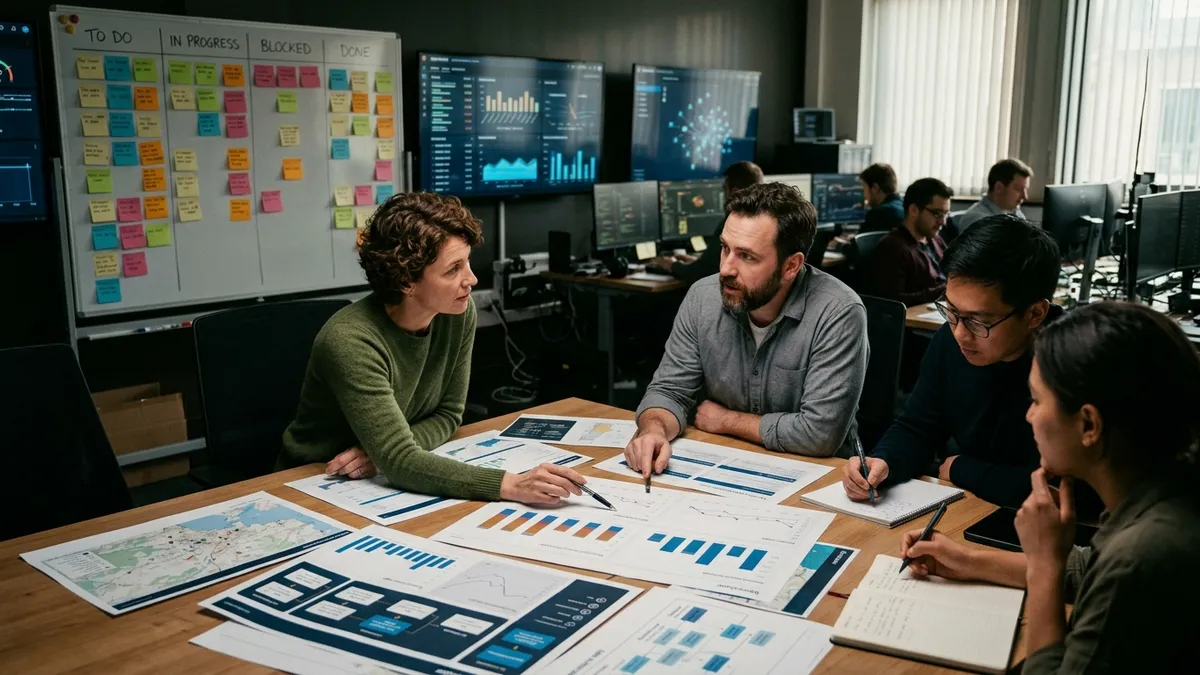
A practical OpenClaw trend on July 23, 2026 is that useful agent systems are being packaged less like chat sessions and more like operating loops. Across current official documentation and product writing from OpenAI, Anthropic, Google, and GitHub, the same pattern keeps appearing: one agent runs in the background, specialized subagents handle narrower parts of the work, and a human steps back in through a review queue before anything consequential is finalized. For solo operators, creators, agencies, and compact software teams, that is more than a design preference. It is becoming the most legible way to make AI work reusable without letting it become chaotic.
The source trail is unusually consistent. OpenAI's current Background mode documentation says developers can execute long-running tasks asynchronously and poll them over time. OpenAI's June 25, 2026 report How agents are transforming work argues that work is shifting from short chatbot interactions to delegated, long-horizon tasks. Anthropic's April 9, 2026 research post Trustworthy agents in practice emphasizes human control, plan review, and clearer oversight when subagents are involved. Anthropic's current Claude Code documentation for Subagents in the SDK frames subagents as a way to isolate context and run focused work in parallel. Google's May 12, 2026 post Build Long-running AI agents that pause, resume, and never lose context with ADK describes durable memory, dormancy gates, and delegated subagents for real workflows. GitHub's February 24, 2026 article Multi-agent workflows often fail. Here's how to engineer ones that don't argues that typed schemas, constrained actions, and logged intermediate state matter more than adding more model capability.
Background execution is becoming the default starting point
The first part of the trend is simple: operators increasingly expect agent work to continue after the initial prompt. OpenAI's research says the unit of work is shifting toward longer delegated tasks, and its background mode docs describe the infrastructure for letting those tasks run asynchronously. That matters because a useful workflow often contains waiting. A founder may want a market scan prepared before the morning check-in. A creator may want source gathering and transcript cleanup handled while other work continues. A small support team may want overnight ticket clustering before anyone opens the queue.
In OpenClaw terms, that favors repeatable entry points over ad hoc chat prompts. A recurring monitor is more dependable when launched through cron jobs. A lightweight daily check becomes easier to trust when it is paired with heartbeat routines instead of memory alone. The practical shift is that operators are no longer asking only, "Can the agent do this?" They are asking whether the task can be resumed, inspected, and rerun without starting from scratch.
Subagents are being used to protect focus, not to create spectacle
The second part of the trend is narrower specialization. Anthropic's documentation describes subagents as separate worker instances that can isolate context and run focused tasks in parallel. Google's ADK example uses delegated workers inside a longer routine because one monolithic prompt becomes harder to manage as the workflow stretches across days. This is an important shift for smaller operators because it reframes multi-agent design as a context-management tactic, not a branding exercise.
A content operator might use one worker for research, one for source validation, and one for packaging a draft. A small ecommerce shop might use one worker to collect low-stock signals, another to inspect supplier status, and another to prepare the review packet for the owner. A developer running OpenClaw against a live repo can split tasks between code search, test analysis, and documentation updates while preserving a clear main thread. That aligns closely with existing OpenClaw guides on custom skills and browser control, where the value comes from bounded responsibilities rather than broad autonomy.
Review queues are replacing the idea of full autonomy
The third part of the trend is the return of the human, but at a better moment in the workflow. Anthropic's April research explicitly argues for meaningful human control and describes plan-level approvals as more useful than endless step-by-step interruptions. GitHub's February article similarly recommends validating every boundary, constraining the final set of actions, and logging intermediate state. Read together, those sources point to a practical operational model: let the agent do the gathering, sorting, drafting, and normalization in the background, then surface a clean queue for human judgment.
That pattern is especially relevant for OpenClaw-style SMB and creator stacks. A newsletter workflow can gather links, summarize articles, and format sections before a human approves the final issue. A client ops workflow can collect exceptions from several dashboards before the owner decides what gets escalated. A prospecting workflow can enrich a list and draft outreach notes, then pause before anything is sent. This is why pages on webhooks, founder daily ops, and recent coverage like long-running agent routines and handoff workflows for small operators fit together so well. They all push toward the same end state: more automation before the decision, not instead of the decision.
The implementation pattern is getting clearer
The strongest signal from this week's source set is that the winning operator stack is becoming easier to describe. One durable trigger starts the workflow. One main agent owns the run. Narrow subagents handle bounded subtasks. Schemas or structured outputs keep handoffs legible. Logs preserve intermediate state. A review queue holds the point where money, code, publishing, or customer communication is about to move. That pattern is modest compared with the grand claims often made about autonomous AI, but it is exactly why it is spreading.
For solo operators and small teams, the appeal is practical. This architecture does not require a large internal platform group. It can be assembled from scheduled runs, saved instructions, browser steps, API calls, and one disciplined approval surface. The OpenClaw trend on July 23, 2026 is therefore not abstract "more agents." It is the rise of a more operational formula: background execution for continuity, subagents for focus, and review queues for control.
Sources
- OpenAI Developers, Background mode
- OpenAI, How agents are transforming work
- Anthropic, Trustworthy agents in practice
- Claude Code Docs, Subagents in the SDK
- Google Developers Blog, Build Long-running AI agents that pause, resume, and never lose context with ADK
- GitHub Blog, Multi-agent workflows often fail. Here's how to engineer ones that don't